




More News
- Intelligent Welding Robots Drive the Upgrade of Manufacturing in India
- What industry applications require real-time thermal distortion compensation in H-beam welding machines for EN 1090-2 EXC3 execution class?
- Which H-beam welding machine model delivers lower TCO over 5 years when welding AS/NZS 1554.1 Class 4 joints in Australian mining fabrication shops?
- How long does it take to ship an H-beam welding machine with dual-axis CNC torch height control from Shanghai to Rotterdam port under current IMO Tier III emission compliance requirements?
- Why does customer support for H-beam welding machines rarely resolve issues with mismatched IGBT pulse timing and AWS D1.1 Clause 5.21 preheat validation?
The global robotic welding market was valued at $8.1 billion in 2025 and is projected to grow from $9.0 billion in 2026 to $27.9 billion in 2034, exhibiting a compound annual growth rate (CAGR) of 15.20% over the forecast period. In 2025, the Asia-Pacific region dominated the global market with a share of 47.60%.
Robotic welding is an advanced robotic technology that utilizes programmable robotic systems to execute welding and material handling operations with high precision and consistency. These systems minimize human intervention while ensuring exceptional surface finish, repeatability, and operational efficiency throughout the manufacturing environment.
The increasing deployment of robotic welding is driven primarily by factors such as rapid industrialization; the growing prevalence of automation in the automotive and metal industries; the demand for high-quality welding; rising labor costs and availability challenges; and the integration of Industry 4.0 technologies—such as artificial intelligence and the Internet of Things—to support smart manufacturing.
Labor Shortages and Skills Gaps Are Driving Market Growth
The surge in labor shortages and skills gaps within the welding industry is significantly driving the growth of the robotic welding market. An aging workforce and a lack of new entrants into the sector have resulted in a severe shortage of skilled welders, prompting manufacturers to seek out automation solutions. Robotic welding systems can enhance efficiency, ensure consistent weld quality, and alleviate the challenges associated with finding skilled welders.
The American Welding Society estimates that by 2029, the industry will face a shortage of approximately 320,500 welders—a 42% increase over current personnel requirements. This shortage highlights the growing demand for robotic welding to sustain production, in addition to the pressure of rising welding costs.
By Product Type
Widespread adoption in the automotive and heavy industries has fueled the growth of the welding robot market segment.
Based on product type, the market is segmented into welding robots and collaborative welding robots.
In 2026, the welding robot segment captured the largest market share—79.78%—driven by its exceptional reliability, precision, and high production efficiency. Welding robots are extensively utilized in automotive manufacturing and heavy industrial applications to boost productivity, ensure consistent weld quality, and further minimize operational downtime.
The field of collaborative welding robots is projected to achieve the highest Compound Annual Growth Rate (CAGR) of 21.6%, driven by their lower costs, ease of integration into existing manufacturing environments, and ability to work safely alongside human workers. These advantages make them increasingly attractive—a factor that has significantly accelerated their adoption across various industries—as this sector expands rapidly and shapes the future of automated welding solutions.
By End-Use Industry
The Automotive & Transportation Sector Dominates the Market Due to Its Extensive Precision and Speed
Based on end-use industry, the market is segmented into automotive & transportation, aerospace & defense, metals & machinery, electrical & electronics, shipbuilding, construction, and others.
In 2026, the automotive & transportation sector held the largest market share, accounting for 42.33%. This sector has maintained its leading position in the market by leveraging robotic welding to achieve superior precision, high-speed operations, and maximized mass production capabilities. These advantages contribute to enhanced manufacturing quality, cost savings, and consistent output, thereby sustaining its market leadership.
Throughout the forecast period, the construction industry is projected to grow at the highest Compound Annual Growth Rate (CAGR) of 15.2%. This growth trajectory is being driven by the expansion of global infrastructure projects and the increasing adoption of automated welding for structural components. The inherent advantages of robotic welding—specifically its efficiency, accuracy, and safety—have established it as a pivotal technology within modern construction methodologies.
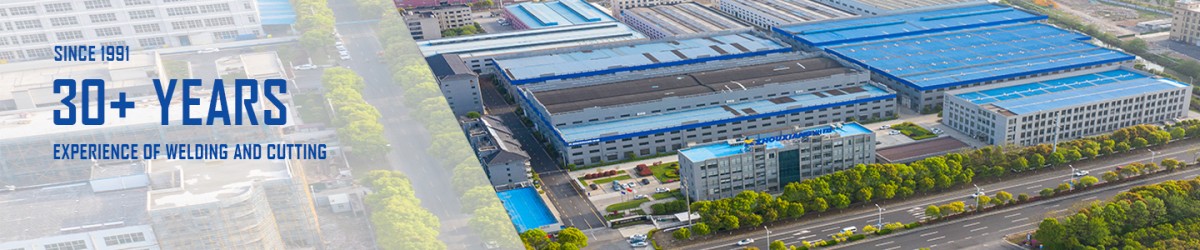
Zhouxiang Enterprise
Specializes in the production of H-beam light and heavy steel production lines, box beam production lines, horizontal production lines, double-joint welding and straightening automatic lines, steel structure robot intelligent workstations, and various intelligent production lines; including CNC flame plasma cutting machines, fiber laser flatbed cutting machines, laser pipe cutting machines, tube-sheet integrated machines, handheld laser welding machines, H-beam assembly machines, gantry submerged arc welding machines, H-beam straightening machines, shot blasting machines, H-beam assembly welding and straightening integrated machines, welding special machines, auxiliary machines, etc.
Zhouxiang manufacturing, professional quality, high precision, high speed.
Leading technology, stable quality, products are sold well at home and abroad.